

Professional Guide to Organizing Products in a Rental Warehouse
The thunderous noise of moving massive goods and the vibration of the warehouse floor as giant forklifts transport extremely heavy loads are not scenes from an action movie. They reflect the everyday challenges faced by professionals working in the warehouse rental and logistics industry. Handling heavy goods is not just about physical strength—it also requires
knowledge, understanding, and careful planning to prevent disasters that could occur at any time.
Imagine a rental warehouse filled with oversized and extremely heavy products. Without proper organization, such a place can quickly become a dangerous environment. Goods may fall onto workers, damage property, or even cause the warehouse structure to collapse. In addition to safety risks, poorly organized heavy goods can reduce operational efficiency, making product handling more difficult and causing unnecessary delays.
In this article, we will introduce the techniques that professionals use to prevent accidents in rental warehouses while improving operational efficiency. We will also answer common questions about the equipment and technology that make handling heavy goods easier than ever before. Read on to learn more.
Conquering Gravity: The Science and Art of Organizing Heavy Goods in a Rental Warehouse
A rental warehouse filled with heavy goods may seem like a place full of challenges for many people. However, for professionals, it is a workplace where they apply their knowledge and expertise to “conquer gravity” by creating storage
spaces that are both safe and highly efficient In this article, we will introduce practical techniques that you can apply to organize heavy goods properly, improve warehouse safety, and maximize operational efficiency.
- Weight Distribution
Weight distribution is one of the most important principles for organizing heavy goods in a rental warehouse. It helps reduce the risk of damage to the warehouse floor, storage racks, and the products themselves, while also minimizing the possibility of accidents caused by products tipping over or structural failure. The basic principle is simple: do not place all heavy goods in a single location. Concentrating heavy items in one area creates excessive pressure on that point, which may cause the warehouse floor to sink or the storage racks to exceed their load capacity and collapse. Instead, distribute heavy goods evenly throughout the warehouse. This helps reduce concentrated pressure on any one area and allows both the warehouse
floor and storage racks to support the load more evenly and efficiently. For example, if you have goods weighing 1,000 kilograms and a storage rack with four levels, where each level has a maximum load capacity of 300 kilograms, you should distribute the weight as follows: Bottom Level: 300 kg ,Second Level: 300 kg, Third Level: 200 kg,Fourth Level: 200 kg. This balanced distribution helps improve safety, prevents overloading, and extends the lifespan of both the warehouse floor and the storage racks. - Store Heavy Goods Close to the Floor
Storing heavy goods close to the floor helps reduce the risk of items tipping over or falling. Placing heavy products on lower levels lowers the center of gravity of the storage rack, making it more stable and less likely to tip or lean. If heavy goods fall from higher shelves, they create a much greater impact, which can damage the products and pose a serious safety risk to warehouse personnel. Keeping heavy items closer to the floor helps minimize the severity of the impact in the event of an accident. In addition, storing heavy goods on upper shelves places greater stress on the storage rack structure and the warehouse floor, increasing the risk of structural damage. Positioning heavy items on lower levels reduces the load on the rack system, making it stronger and more durable. It also helps distribute weight more evenly across both the storage racks and the warehouse floor, resulting in better load balance. Finally, lifting heavy goods to higher levels requires more labor and handling equipment. By storing heavy items closer to the floor, loading, unloading, and transportation become much easier, safer, and more efficient. - Use the Right Storage Racks
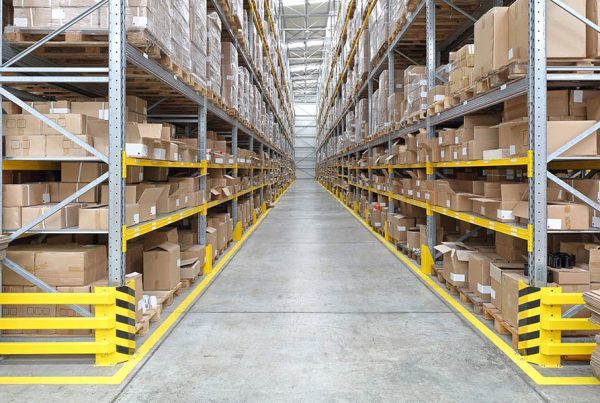
Storage racks serve as the primary structural support for warehouse goods. Choosing the wrong type of rack can lead to serious accidents, such as rack collapse or falling products that may result in property damage or personal injury. Fortunately, many rental warehouses offer a variety of storage rack systems, including Selective Rack, Push Back Rack, Double Deep Rack, Drive-In Rack, and Flow Rack. Each type has its own advantages and limitations and is designed for different products and warehouse operations. Therefore, you should choose the rack system that best suits your inventory and operational requirements. Each type of storage rack also has a different load capacity. It is essential to select a rack that
can safely support the weight of your products. Most storage racks are labeled with their maximum load capacity per level or per pallet. In addition, the rack dimensions should be appropriate for both the size of your products and the available warehouse space. Choose racks with sufficient height and depth for storage, as well as adequate spacing between shelves to allow goods to be stored and retrieved easily. Another important consideration is the rack material. While most storage racks are made of steel, other materials such as wood or plastic are also available. You should select materials that are strong, durable, and suitable for the warehouse environment. It is equally important to choose storage racks that meet recognized safety standards, are certified by relevant authorities, and come with clear operating and maintenance guidelines. If you store extremely heavy products, such as steel plates or industrial machinery, you may need to use Heavy Duty Racks, which are specially designed to support exceptionally heavy loads. Alternatively, if you handle products of various sizes, an Adjustable Rack may be the ideal solution, as it allows shelf heights to be adjusted to accommodate different types of products efficiently. - Keep Warehouse Aisles Well Organized
Well-organized aisles are one of the most important aspects of storing heavy goods in a rental warehouse. Aisles serve as the primary routes for moving products, and poor aisle planning can increase the risk of accidents and reduce operational efficiency. Warehouse aisles should be wide enough to allow material handling equipment, such as forklifts and pallet trucks, to move safely and efficiently. There should also be sufficient space for turning or maneuvering equipment. In addition,
workers should be able to pass each other comfortably without congestion and have enough room to step aside while goods are being transported. If your products are particularly large or long, the aisles should be made even wider to ensure that goods can be moved without hitting surrounding obstacles. The condition of the aisle surface is equally important. Aisles
should have a smooth, level surface that is free from potholes, uneven areas, and obstructions to prevent slips, trips, and falls, as well as damage to products during transportation. The flooring should also be strong enough to support the combined weight of the goods and the material handling equipment without sinking or becoming damaged.For example, a large rental warehouse that stores heavy products may benefit from a one-way traffic system, allowing forklifts to move more safely and efficiently. Likewise, if your warehouse handles oversized products, you should consider designing extra-wide aisles to ensure that goods can be transported safely without colliding with surrounding structures or obstacles
- Install Warning Signs
You have probably seen warning signs in rental warehouses such as “Caution! 500 kg Load. Do Not Lift Manually. Use a Forklift Only.” or “Danger! Fragile Goods. Do Not Stack.” These warning signs play a vital role in ensuring warehouse safety.Warning signs should clearly display important information about heavy goods, including the weight, dimensions, and type of product (such as the material or shape). They should also provide proper handling instructions, such as whether the goods must be moved by forklift, crane, or must not be lifted manually, as well as storage precautions like Do Not Stack or Keep
Away from Heat. The text on warning signs should be large, clear, and easy to read from a distance. High-contrast color combinations, such as black text on a yellow background or white text on a red background, should be used to maximize visibility. In addition, warning signs should be installed in highly visible locations, such as on storage racks, pallets, or at warehouse entrances and exits, so that employees can easily see and follow the safety instructions
Conclusion When it comes to storing heavy goods, safety should never be compromised. Warehouse floor damage, collapsed storage racks, and damaged products are risks that can be prevented with proper planning and professional warehouse management. At Chumphol International Marketing, we are committed to protecting your heavy goods with the highest level of care. Our rental warehouses are built with premium-quality materials and engineered to support heavy loads safely. Our experienced team provides professional storage planning and organizes heavy goods according to industry best practices to maximize both safety and operational efficiency. For complete peace of mind, our facilities are protected by a 24-hour security system, ensuring that your products remain safe around the clock. With Chumphol International Marketing, you can trust that your valuable goods are stored securely and professionally, giving you confidence in every square meter of
warehouse space.
Interested in Renting a Warehouse or Factory?
If you’re looking for a warehouse for rent, factory for rent, warehouse with office space, small storage warehouse, or self storage solutions, feel free to contact Chumphol International Marketing through any of the following channels:
Fax: +66 2 973 0131
Mobile: +66 81 440 0083
Email: chumphol@chumphol.com
Facebook: Chumphol Warehouse for Rent
LINE ID: @chumpholinter